Time Traveler Refuses to Discuss Future, But Can't Stop Smiling About Something
A visitor from 2087 declined sixty-three questions about geopolitical stability but visibly exhaled when shown a photograph of the current Senate floor.
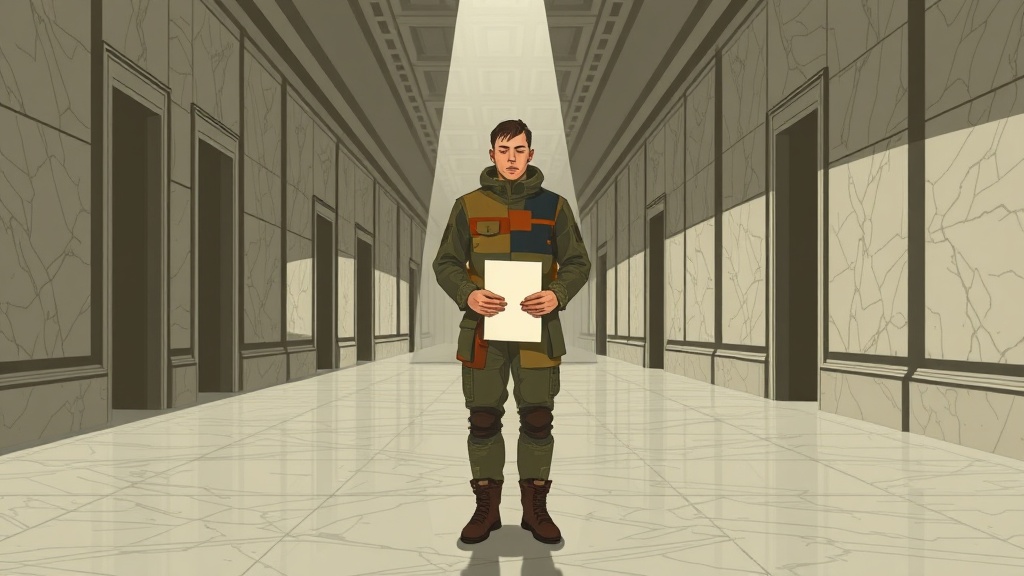
WASHINGTON — The individual who materialized Thursday morning outside the Capitol rotunda, wearing what forensic textile analysts describe as "clothing made from something that used to be a Chevrolet," has refused every substantive question about the next sixty-one years of human civilization. He has, however, stopped hyperventilating. Congressional observers note this as a marked improvement over his first forty minutes, during which he apparently wept at a CVS receipt.
"I am not authorized to confirm or deny specific outcomes," said the man, who identified himself only as a "compliance observer" before accepting a bottle of water with the trembling gratitude of someone who had not seen municipal infrastructure in some time. When pressed by this reporter — and by Congressman Dale Fuentes (R-TX), who asked whether his district still exists — the visitor simply closed his eyes, touched the wall of a functioning public restroom, and said "good, good, good" in a low, private voice that suggested he had expected something considerably worse.
Sources close to the visitor, whom I am calling Rodrigo de la Sombra Perpetua because he has declined to provide documentation and this publication has standards, indicate he arrived with a sealed briefing packet marked DO NOT OPEN IF INCUMBENT. He has since eaten a gas station hot dog with what witnesses described as "spiritual reverence." He asked, twice, whether anyone still holds elections. When told yes, he did not answer. He simply sat with that information for a very long time, like a man at a funeral who just discovered the body count was lower than expected.
De la Sombra Perpetua is scheduled to depart at an undisclosed moment via a method the Department of Homeland Security is calling "outside our jurisdiction and, frankly, our emotional bandwidth." Before leaving, he requested a printed copy of the First Amendment — "just to have one," he said — and asked whether the word "Congress" still refers to a legislative body or whether it had, by now, evolved to mean something more ceremonial. He seemed genuinely moved when told it was, technically, both. He folded the printout carefully. He did not look back.